
The Sweet Science and the Art of Training Boxing Champions (w/ Thell Torrence)
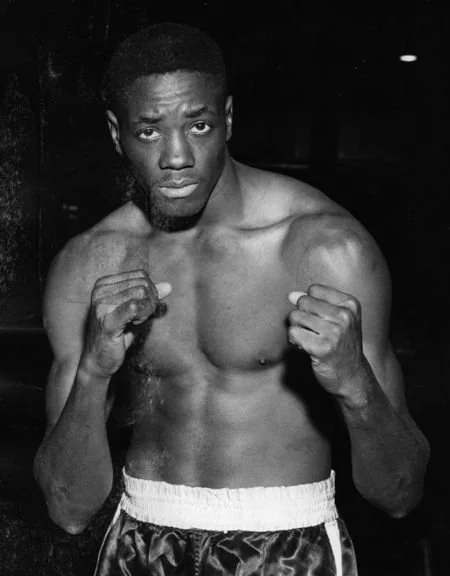
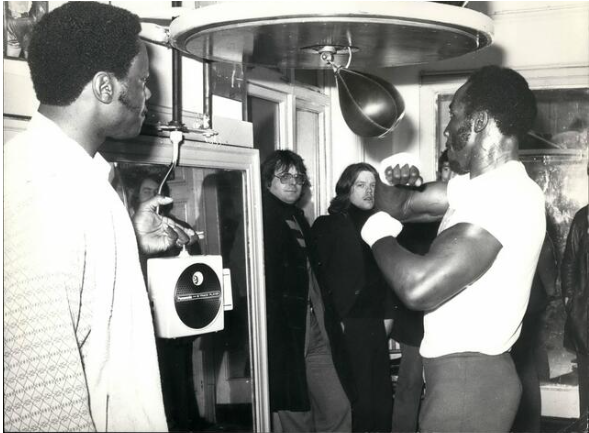
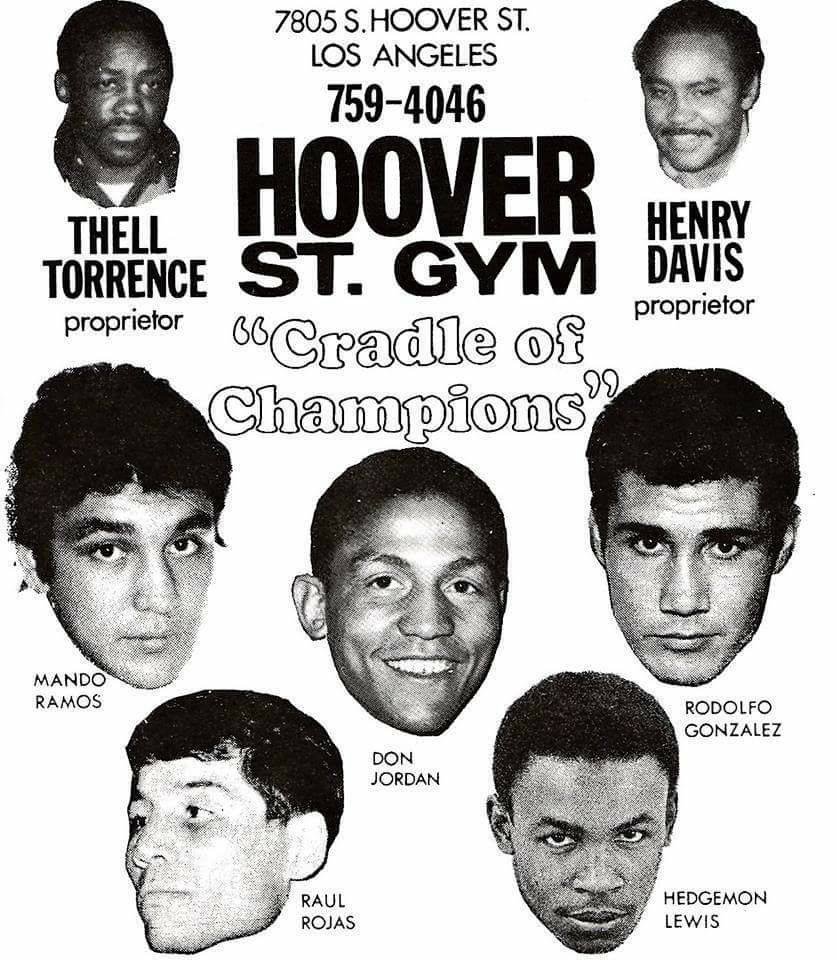
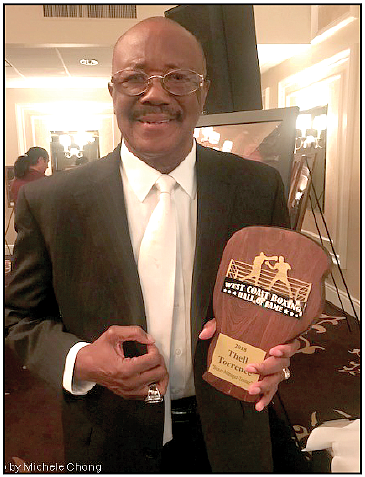
Boxing Hall of Fame icon and businessman Thell Torrence agreed to speak to me about his unique path to becoming one of most celebrated fight trainers in history. Mr. Torrence recounted his childhood in Camden, Arkansas, his time in the navy, and the circumstances that led to him become a boxer. Mr. Torrence also spoke about meeting and being trained by legendary boxing trainer Eddie Futch, before becoming a trainer himself. We spoke about how he came to own Hoover Street Gym in Los Angeles for decades as well as the many champions who came up in the gym. Finally, Mr. Torrence shared some of his unique experiences and memories as the trainer of such notable fighters as Ken Norton, Riddick Bowe, Tony Tubbs, Avery Rawls, Hasim Rahman, Mike McCallum, Wayne McCullough, Montell Griffin, Virgil Hill, & Vassiliy Jirov.
Welcome, Thell. Thanks for joining me.
Thank you, my friend.
Now, you're from Camden, Arkansas. That's where you grew up. What can you tell me about what was going on there at the time when you were there?
Well, Camden was a unique place. We had a lot of… good athletes came out there… That was our number one thing. Actually, it was baseball. I didn't like baseball. It was a little too slow. Then it was football, which was great you know because… it's physical but it's mental well. Then basketball was great for me also because I always was very quick and I did quite well with that, and so I kind of focused on basketball and football, and that's kind of how I got started. And from there, I had a lot of scholarships, but I had no money. Didn't want to put the family in a very awkward position. So, I had a talk with my brothers and I told them, I said, "Listen, I'm going to go in the military for four years only. When I get out…” y that time, the first year, one of my brothers would be out. The next year, my other brother’d be out and they could kind of assist financially and helping the others… get out of school and go to college and whatever. So, then I moved to L.A. and the rest is history.
Around when did you move to L.A.?
I moved to LA around 1960… ‘59 or ‘60. Apparently that time I was going back and forth… Prior to the move, I owned the Hoover Street Gym and that's a story within itself.
Yeah, we'll talk about Hoover Street Gym in a bit. So, how was California different from Arkansas for you?
Well, I had more opportunities here. Arkansas, there was one guy I knew, a guy by the name of Willie Browning, and I owe that guy so much. You know, he was he was a gentleman. He was a fighter. He was from St. Louis. You know, he started a boxing team there, and that's how I got started as a result of that. You know, I played basketball. I was on the… basketball team. Then, later on is when I got into boxing and I was on the All-Navy boxing team and winning championships in all those areas… [Willie Browning is] the guy that I [attribute] the result to where I where I am today. Yes.
…How did you [come] to be a boxer yourself, though?
Okay… I went in the military, and like I said, when I was in the military I was a basketball player. I saw these guys box and I looked I said, "Oh god, I can do that good, you know?" And I tried out for the team and then I had a few knockdowns and the rest is history. And they started calling me Joe. That's how I got the name. Guys called me Joe. I know they had to be related in somewhat to the military and that's how I got started. From there to California, and… I met a guy by the name of Eddie Futch.
That was in California?
Yes. He's historical and he's a legendary guy.
Yeah.
But… at the time I was training at the Hoover Street Gym and I don't want to ignore or ever forget the fact a guy by the name of George Burress, who owned not only the Hoover Street Gym but that whole block. And this guy saw me one day and he mentioned to me. I mean, I didn't want to, you know, I got to tell this story. I think it's important. I want to give credit where credit was due. George Burress, he said, "Look, you need this gym." I said, "Gym?… I don't have no money to buy a gym." He said, "Well, matter of fact, you need all the property here, everything." He was a wrestler. And he said he was going back to England and “I want you to have this property.” “You're kidding me.” I said, “Man, I'm having trouble paying for lunch and you want me to…”
*laughter*
And he said, “Trust me. [you can do it].” And so he said… “You give me a thousand a month and $10,000 at the end of the year. It's yours." I said, “Well, Mr. Burress… I can't believe it." He said, “You don't have to believe it. This is what I'm telling you. There something about you I like… it's your property.” So I went down to… I think it was Santa Monica, where we had to set it up, and he set everything up for me. Disappeared. I haven't heard from the guy since… He made such a contribution to me… I'm just, you know, heartbroken when I start thinking about I didn't get an opportunity to speak to him. But the other step… one of my trainers, the guy that was around he gym, Henry Davis, was his name, from Detroit. Good fighter. I think Henry fought about three or four world champions himself. He jumped me. He said, "Why don't you let me involved in get involved with this?" I said, "Okay." I didn't, you know, I know he was a worker. He did things. I said, "Okay." So, I gave him half of the property just like that. And we ran it… for several years until he got into some problems… and I bought him out of it. The rest is history. We've had over five world champions come out of the gym. Yeah. I mean as kids and some legendary fighters: Ken Norton, Mando Ramos, Raul Rojas… just a host of kids.
…And that was on 78th & Hoover?
Correct.
What was the neighborhood like when you first got there… at the gym?
Yeah, the neighborhood was kind of [a] rough place, gang-infested… in the areas, you know, I was kind of green and stupid, you know, because I didn't know anything about the gangs… from where I came from. I came right out of Arkansas… It’s a wonder I didn't get killed, but for some reason I didn't and they respected me for it and that's just kind of history. Yeah. But one of the things that that facility that area had two houses, the Hoover Street gym, an auto garage, and a house. So, I eventually pulled the house down. They were putting in the San Bernardino freeway. I purchased some houses, apartment buildings on the freeway… You know, I kind of forgot about that lot and I ran it for years until I finally retired and sold the property, moved to Vegas.
And you mentioned that you had met out there the trainer Eddie Futch. How did he come to train you?
Well… I was still in the military and I was just getting out of the military, training at the Hoover Street Gym and he came in one day and introduced himself to me. He'd watched me for several days and introduced me to him. And another guy that assisted him in training me was a guy by the name of Jimmy Edgar from Detroit, who had fought Jake Lamotta three times, you know, and a number of other guys. These were legendary guys. I was just a young punk at the time and that's… the way that everything got started… [Back to] my relationship with Eddie Futch, who was a well-respected gentleman at that time… we were together until he passed away. He's the guy that actually started me in professional boxing. Yeah… and as a matter of fact, Shelly, the girl that works for me now, she worked for Eddie Futch. So he passed away, then she came over and started working for me, and she's been working for me since that time.
That's great. And you were you were a trainer under him as well, right? So when he was training, you were training as well. The same fighters?
Yes… When I met Eddie, I was a fighter at the time, you know, and I was, like I said, I got out of the Navy. I was still fighting. And then I started some young kids off while I was training and he was training me. They were like, 13, 14, 15 years old. I was training those kids, and I was running the property, working a 9 to 5 at a facility [I eventually] retired from, raising a family, and ended up with five undefeated fighters and most of these kids won the Golden Gloves. At that time, it was quite a feat. I didn't really realize that, you know… you just do things. You don't [even think about it]. It's a program. Everything in life is a program and… that's the way I ended up involved with that situation.
When you were in the Navy, what were some of the most interesting places you traveled?
Oh, I think one of the most interesting places I went to was Japan, The Philippines, and Hong Kong. They're unique places I went. Japan is where I actually started… boxing there. There's not very many… fighters there. I was a tall skinny guy, you know, didn't weigh a whole lot. I was a light middleweight and yeah, we went to Japan there, but we fought all through there… and I fought in the All-service. I'd won everything I was champion of everything. I beat the All-Navy champion and the all-Air Force champion. But the guy I lost to was a guy by the name of Eddie Crook, who was the All-Army champion. And he beat me, and I chased that guy everywhere, you know? I… followed him everywhere I’d get a chance to. I wanted to fight him again. But he ended up winning the Olympics the [1960] Olympics, I think… I was talking to one of my friends… Kenny Adams… he'd always tease me about getting beat by Eddie Crook… and he was in the he was in the Army as well. And I got the sad news… it's been a maybe couple years now that Eddie Crook passed away… And I got the news here a few weeks ago. Kenny Adams… he passed away as well.
But we [did] very unique things in Japan. We traveled everywhere. You know I played basketball. I was a basketball player. I was on the All Far-East Navy basketball team and the all-Navy team doing that, you know, and when I got back to California, they had selected a team to play [in] this [league] at the time. But, you know, I got out, got married, no money. I couldn't travel with these guys. I got a couple of pictures of me with them. They were they were a good youth team out of Los Angeles… They traveled all over. So all the while I was boxing, I played basketball… which used to drive Eddie Futch crazy. It was my trainer. He was always worried about me getting hurt playing basketball. You know, I get a finger stuck in my eye or something like that… But it was just in me. I had to fill up all my time with something to do, you know. I didn't want… to waste time. So, I just had to have something to do all the time. I had a lot of energy and I had to utilize that. Yeah. And basketball was one of my sports. Of course, I played baseball too. I like basketball because the timing, the quickness, the reflexes. Yeah. And the other one was boxing.
Sounds like you played everything: football, basketball, baseball, boxing.
I did that. Yeah.
You mentioned your going to school. You you worked at NI Industrico. Is that right?
It was a place at the time was called Norris Industries… but they changed the name to NI industries. They ended up with I think about 10 or 12 companies.
You also graduated from Compton College and you were doing business administration.
Yes… I was working. I was going to school at the same time. I was playing basketball. I was working. I don’t know how I did everything, but my objective was not to waste time. I always figured one of the most important things in our life is time. And not to waste it. And that's what I did. It… might have been stupid for me to try to do everything at that time, but I that was my concept. The way I did it. Yes.
Yeah. If I'm not mistaken, later on you you went to UC San Diego and studied labor relations?
Right.
…Were you were you in the boxing game at that point?
At the same time, I was doing everything. I was like a crazy person, you know, I didn't want to waste any time. I was doing everything. I was overloaded.
Now, given that boxing is mostly made up of… independent contractors… why did you decide to study labor relations?
I was working at… Norris Industries or NI Industries at the time. Then… I started going to school at the time because… I was moving up so fast in the company, you know… well let me step back. I started out as a machinist. And from there I went to the chem lab and from the chem lab they wanted to… promote me to supervisor. Instead I went into the chem lab at that time. And one thing led to the next, and from there as a personal manager for one of the companies. And I'd been… in the employee relations department. I was affiliated with a very good, aggressive crew and people in there, and we had a team just taking over everything. And we just… ran because it was one of those unique times that things were happening. As a matter of fact, we had no female supervisors at the time. And so we had some girl inspectors in the plant. And so I hired the first female supervisor in the plant. That was historical. And one thing led to the next. And I look back on it, I was kind of proud that this thing happened. And… when I do see some of these people, they remind me of some of the things that they had accomplished as a result of that. One lady met me and said, "Mr. Torrence, you don't realize, but you're the guy that saved marriage.” You know, things like that. You know, when you meet them in the street and people come up to you like that, it’s [a great] feeling…
Yeah. So, going back to boxing a bit, everybody I know who is successful in boxing, the boxers themselves, the trainers, etc. are very big boxing historians. They're big on boxing history… When you were a fan or when you were boxing, did you study fights?
No… when I got into boxing from my hometown, I only know one guy that had been a fighter. That was my uncle by the name of James Valentine. And he's the guy I guess I was just a young kid, six, seven years old, that I knew. And then the next was Willie Browning, the guy that I met, you know, that I attribute so much for where I am right now. [As a] result of him, you know, I went into, like I said, I went into the Navy and I didn't really find out a lot about boxing and professionals until I got out of the Navy. And I… ran up on Eddie Futch, who was a legendary guy, and I guess I should say the rest is history because everything started with that.
… Once you did start training folks… did you study film at all of the fighters that your fighters were going to be fighting?
At that time, we didn't have films available to us… and it was tough… And you had to have a good memory. Know what I mean? Because if you see a guy, you know, you don't have very much time. You got to figure out what he can do, you know, when he can do it, where he does it at, you know, all these most effective things about him right away… Because, see, in that ring, there's certain spots in that ring you do certain things… [and certain spots] you don't do certain things in that ring. And you got to learn that. If not, you’ll get your head taken off… So if you're going to be in this kind of business, you got to learn everything you can from [as many] successful people [as] you can.
In terms of fights that were broadcast, were… big fights… broadcast on television and were some on closed circuit TV? Or, how were you all watching big fights if at all?
We were… not doing very much watching fights at that time. That's why I said you had to have a good memory. You go to fights, you see this guy, you had to chalk him down. You have to know everything about him. You know, if you see him in the fight, you know, you just had to study people, you know? Later on they they started TV, but they had the Olympics, really started if you got the opportunity to go. Of course, they had some great legendary fighters at the time in all these different states. And… you learn from them… it's just things you read about them in the paper and if you see them, other things you hear. That's the way you got your information, you know? And what was important always number one you have to know… one of the first things you look at is the style of the fighter. What kind of jab [does] he have? How’s his foot work? You know what I mean? How's his power? What about his reflexes? You know, his timing, coordination, those are the kind of things that you had to recognize very early and not only in your career, but in the fight.
Yeah… Layman boxing fans… They say boxers from different places have different styles, right? They may say like the Mexican style or like… the Cuban or the Puerto Rican or… Philly or Detroit or… British or Irish or something, as if those fighters have distinct styles, if there are like common trends amongst them. How true is that? Are there actually regional boxing styles?
Yeah, there used to be a certain style now, but since television, everybody gets a chance to watch everybody and internationally they do. But today, you know… you look at the Mexicans: usually tough, gritty fighters. That’s the way we term it… A lot of the boxers were skilled boxers, punchers, you know. And one unique thing about boxers at that time I'm talking about before the Muhammad Ali, Sonny Liston days. Back in the… Joe Louis, Rocky Marciano, Ezzard Charles days, guys like that, they were very skillful and you didn't talk a lot, but when Muhammad Ali came on the scene everything changed. Muhammad Ali. See, I think Ali was the gold medal winner, I think in 1960…
Yeah. At that time I was [getting paid]. I had won every [fight] in the amateurs. And I fought in the All-service, and I lost to a guy by the name of Eddie Crook. He won the Olympics that year and he was on the team with Muhammad Ali. At that time, it was unique. These guys were different. You didn't have to win the Olympics, but if you went [and competed], it’s historical. You get your name, you get notorized for those kind of things. So I ran into some of those legendary [figures]. That's how I was able to meet… guys like Muhammad Ali. Of course, he trained at my gym at the time I owned the gym, but he went on and won the Olympics… which was legendary. Bundini Brown. I remember one day at that time they were all in the gym, man. And there’s some stories about all these guys.
Now you trained boxers who were very different, right? Very different styles, very different sizes, just different… fighters. Was there any commonalities that you had in your training of them or did it depend on the guy?
…You can usually tell good trainers by their ability to train different styles of fighters. A lot of fighters have different styles and some guys are very effective one style, very effective in another style and not so effective in other styles. And you had to know who trained [a fighter]. is important if you're going to fight this guy to know who's training because if you know who his trainer is because we didn't have TV like it is today: you get some idea or some concept how this guy trained and you could use that as your advantage as well… You had to be able to adapt in those days to different styles and so forth.
Can you give me an example of how a different guy, like maybe a style or a body type is amenable to certain styles? Like what would you do if you get a taller guy with long arms versus… how do you train a guy who's shorter?
Yes. Usually, you exaggerate the norm. If you're a tall guy with long arms, good reflexes, you teach him boxing. Teach him how to box. You teach him where he should be in the ring, where he's most effective in the ring, you see? You teach them how to fight off the ropes, you know, and how to move on your feet and things like that and how to feint, you know, how to turn your fighter. These basic fundamentals are the ones that you focus on and you find out what's most acceptable for him and you teach those skills and you compound those. A lot of time, that's what determines the trainers with the ability to train different styles of fighters. Yeah. Some guys could be good for sluggers. Some guys could, you know, be good for boxers, you know, but a guy with the unique ability to train those different styles is sometimes very effective when you have more than one guy in your camp...
Yeah. Now, you mentioned you ran across all types of legendary boxers and boxing trainers, right? One of your guys, Avery Rawls, lost to an amateur Mike Tyson, right? But you were also present during some huge and strange moments in [the] 1990s… especially the Riddick Bowe fights. So, one of them in 1993 was Bowe-Holyfield II. That's the one where the fan man flew down. A guy on an electric fan flew down and landed like in part of the ring in Caesar's Palace and there was a big melee and everything. And then another one was ‘96 — again Riddick Bowe versus [Andrew] Golota, when Golota kept hitting him with low blows. He was disqualified and there was a riot at Madison Square Garden, basically… Not a riot, but like a big brawl in the ring and around the the floor of the ring. I just want you to talk to me about both of those strange events during the fights where you were in the corner.
Well… Avery Rawls was a kid from Texas. Just walked into the gym one day. He didn't know what to do. I think he got it evicted from his… [well] not him. He was living in apartment. Had some problems with the people that he was staying with. And he was on the street. Didn't have nowhere to go, and he came by the gym one day and I ran into him. And he asked if he could talk with me, and he did. And I found out the kid was in general a very nice, humble young man from Texas, and that's how I met him. He didn't know anything about boxing, but he turned out to be a very good candidate. Went on… he fought Mike Tyson in the Amateurs and he went overseas represented the US overseas on his tour. So, that was the background on Avery. And Mike at that time was a good guy. Mike was knocking out everybody… He didn't knock out Avery. So, last time I saw Mike, he asked me how was Avery doing. That changed some things for him. So, that was a unique experience there. Bowe-Holyfield was another fight. I mean, these guys put on some shows. Bowe-Holyfield. His style was so unique, you know what I mean? And Bowe gave Holyfield a lot of trouble. Bowe, you know… I think he fought Holyfield about three times, I think.
He did. Yeah. Three times. Yeah.
And they they all were good fights. And Golota was another story…
Well, hold on. Hold on though. *laughter* before we get to Golota. Okay. When the guy flew down on the in the fan in the ring, what were you thinking?
You mean the fan man?
Yeah.
Fan Man came in. Oh. Oh my goodness. I didn't know what to think. As a matter of fact, the way that happened, you know, this guy was circling around uh the auditorium. I think we were at Caesar's outside.
Yeah, it was Caesar's Palace.
Right. And I looked up, Riddick Bowe jumped back. By that time I saw this guy…… he was trying to get in the ring and the guys… I got to tell you, Bowe had a group with him. He had some good people and he had some not so good people with him. They loved him, but they beat the living daylights out of this guy who's trying to get in… and when that happened all hell broke out… broke loose. That was that was something for the history books.
It was. *laughter* I was just looking at [video of] it the other day trying to see if I can find you in the corner.
I haven't seen that since. What an… episode that was… [one of the craziest things] that you’ll ever see in Vegas. And the the Golota situation was… another unique one in Atlantic City. Eddie Futch called me one day and said, "Thell, we got a fight." I said, "Okay." He said, “We’re fighting Golota.” I said “What? Golota" I said, "You got to be kidding me." He said, “They took the fight with Golota.” That's what he was saying. He was not happy about it, you know, because this guy is crazy. He… bit somebody in the ring. I can't say who. I said, “If he bites Riddick Bowe, all hell’s going to break loose.” He said, "Thell, all I can say is that's the fight. They took it.” And that's the way I got the information on Golota. In Atlantic… I think it was Atlantic City…
I think the first one was… Was the first one Madison Square Garden? And the second one was Atlantic City, maybe.
You might have been right… Oh, that was crazy. Crazy. I couldn't believe it. Yeah. You know, listen… I couldn't believe the fact that I was in the ring. They called me. I think… my wife or my son-in-law called me… and said, “I couldn't believe that was you out on the ringside throwing people out the ring.” [I didn’t believe them] until they showed me the picture of it. That was absolutely crazy. That was [really] bad. Embarrassing too, you know?
Yeah. Because this is a big stage, right? And you want to have a good show and all this stuff happens.
Yeah. Absolutely. Yeah. Boxing is a unique sport. Some very unique things happen in this game, man. You know, this is unforgettable some of it. There was a million guys, man. I don’t want to forget Hasim Rahman… [Vassiliy] Jirov, he's a legendary guy. Jirov, you know, he's one of the first guys I went to Russia with to Kazakhstan… He won the first gold medal for Kazakhstan, I think at the time. And I went and he's quite a gentleman. He's here now. He's my fighter until he retired. He lives in Phoenix right now. And… Lennox Lewis is another guy. I didn't train Lennox, but Lennox… he's a little uncordial with me today because… I end up training Riddick Bowe, and… you know we were closer… [There was tension between he and Lennox because Lennox beat him at the Olympics and Bowe didn’t agree with the decision]. [But], he was… a good guy. And Mike McCallum, this is another kid, he just passed away recently. Yeah. But a legendary fighter from…
Jamaica, right?
Yeah. And then Audley Harrison is another kid. And that they sent me to train. He's the reason I went to England. They came here to get me to train him in England. And he was a legendary fighter. He won the first gold medal for England. I think he was 19-0… Yep. And Montell's up here with me.
Montel Griffin. Yeah. Montel Griffin was one of my kids… I started him off as well… Virgil Hill which is another unique guy. He was from North Dakota. Yeah.
And he won an Olympic medal, didn't he?
Right. And so we [had] some legendary throughout the years as well. A lot of people don't mention David DeFigabon, who had a unique ending. David was from Nigeria. He was a silver medalist from Nigeria… which eventually, he end[ed] up fighting heavyweight. And another guy Duncan Dokiwari. Another one of my fighters also. He was a heavyweight. He was a bronze medalist that year. Kenny Croom, I think I mentioned him to you. Kenny was my first fighter. You know, those are some of the legendary guys that I worked with… that have a little history… back in the day. And you probably got a chance to see some of the pictures that I had on my wall here.
But anyway… Wayne McCullough, I [want to] remember him because Wayne was the first Irish champion. I think Wayne won the first… he won a silver medal for Ireland… He won a silver medal world title. And then we went to Ireland… for him to fight there in Ireland. Matter of fact, during the time we was there in Ireland, there was a situation with Belfast. That's another story. I took Eunice with me at the time. We were a little dumb, I didn't know what was going on. She mentioned to me what was going on, but we went there anyway. And I took her with me and they were so nice to her. I came back… They took her everywhere. They treated her like something special there. That was back in the day. But yeah, that's some of the history in this kind of business, you know. Another kid from Uganda I want to mention also Sharif Bogere… He’d come in with one of these lion heads on you know during the fight. He's still fighting. He's about to retire right now. Plus he's training fighters as well. But… yeah we have a little history here. Muhammad Ali, he used to come to my gym. Hoover Street. That's where he first met Ken Norton. We thought we thought he was crazy. He come in screaming and yelling…
* laughter *
All we could do was keep Ken Norton on the table. They come off the table after you slowed down got but but he sort he started a lot you know… And plus… he did all that crazy stuff, but he was quite a gentleman. You get him away from the crowd, he was quite a gentleman. Yeah those are some historical things happened…
Yeah. All right. I have a a series of questions that I ask everybody I speak to. The first one is, "What songs got people on the dance floor back when you were going out dancing at your peak when you were younger?"
Oh, that's a good question, man… Back in the day, I'll tell you what. I was a unique kid coming up, you know. I didn't drink. I didn't smoke… I didn't curse. I didn't do those things the way I came up. Okay. So, when I went in the military, got out of the military living in California, I think I was invited to go to a dance at the 5-4 Ballroom, which was in Los Angeles. And I was in the ballroom… It's kind of crazy. I think James Brown was playing that night. And I can't think of the name of the song he was playing. One of his favorite songs. He was playing and the guys that I was with that night… I was with these Navy guys. We were on the dance floor and… a friend of mine introduced me at the time to my [now] wife Eunice. You know, I had met her prior that time and… they went to dances. And so my brother told me that it was a good idea we go to the dance. So we went to the dance and James Brown was the guy that was playing. The place was jam-packed, you know… I can't remember… but I know that… it is a famous song. I can't think of it right now that he was playing. But that was the night… that I met my wife I'm currently married to now. And that's been going on what? 60 odd years. Unbelievable.
Lovely… All right, this the second question. What is a black cultural work that's a classic but is underappreciated? So, it could be a book, it could be a song or album, it could be a movie… or anything else.
A culture work that's unappreciated?
Yeah. So like a Black movie, Black song or album, or, you know, book, whatever that you think is like a really good classic, but it doesn't get the attention it deserves.
I got to say… Dr. Martin Luther King, “I Have a Dream.” I know that's that's legendary, but I don't think it really… It’s something that, you know, actually changed things as a matter of fact. That would have to be my choice.
Yeah. It's a great speech.
Oh yeah. It’s a great speech. Right.
And then finally, what particular dish did your family make that you looked forward to the most?
*laughter* My grandmother’s chicken and… dressing. And dumplings.
Okay.
You know, and collard and turnip greens. Those were my favorite. And let me add one more thing. Sweet potato.
As a side or a pie?
Pie. Yeah. And… I'll tell you this, one of the things that she made, I haven't seen nobody do it. She called it Irish potato pie.
Irish potato pie? Now, what was that like?
It was kind of like… it was somehow… made with potatoes. And it had crust on it like you do an apple pie and she would do a job with that, man.
Wow. Yeah. I never heard of that.
Yeah. Irish potato pie. That's right. Yeah… that was back in the day. And I talk about it, but that was the unique thing for me that I love about my grandmother, which was some great people. Yeah. When I thought about my grandmother, I think about one thing. My horse.
Your horse?
I had a gray horse.
Ah, I didn't know that.
Yeah. Whose name was Ben. Actually, I used to ride that horse. I’d like to go down there because I'd ride that horse. This was in Arkansas. And one day, I was riding him, you know, and all of a sudden… he's a little fancy horse, you know… he makes these fancy steps… I had made me a sled, you know, and I had him hooked up to this sled. We were up shopping and to pick up these… posts for my grandfather just to do something. And he made a unique step. When he stepped on the ground, all of these what I thought were bees started coming out of the ground, and my grandmother was… with me and the horse started going crazy. They got to start getting on the horse, started covering the horse. He was kicking, he was trying to get loose and everything, and I was right in the bees… I was right in the bees trying to unhook his trace so [he could get] loose. Not one bee stung me. But they covered the horse. They stung my grandmother. And I got him loose. He just took off down the street. And when we did get him, he went home. You know, he ran home. And when we did get there, it was unique to me. I was all in those bees. I didn't get one sting. My grandmother got one sting on foot. I heard her yelling. And that was the most unique thing I can think of. My brother got stung, and I may have been beating them off the horse for [a long time] and then… not one bee stung me. Yeah. I don't know why.
You're a lucky man.
Yeah, that's the only thing I can think of.
Well, Mr. Thell Torrence, thank you so much… It's been a pleasure. And I hope to talk to you again soon.
You're quite welcome, my friend. It's my pleasure as well.
I hope to talk to you again soon.
Okay. Looking forward to it. All right.
Take care.
You take You have a good day.